
You may have heard about hantavirus in the recent news and are wondering what the risk is here in Utah. While hantavirus infections can be very serious, it’s important to know that cases in Utah are rare, and the strain of hantavirus known to spread from person-to-person (the Andes virus) is not found in the United States. The rare person-to-person spread that has been documented has only been associated with the Andes virus in South America and required very close, prolonged contact.
Utah health officials maintain the general risk from the Andes hantavirus remains low as they prepare for the return of Utahns exposed to the virus on a cruise ship. The Utah Department of Health and Human Services will work with the Utahns who were exposed on the cruise ship to connect them with care and make sure they isolate themselves from others if they develop symptoms. Three Utahns were among the 18 people transported from the cruise ship to the U.S. Sunday.
In Utah and the western United States, hantavirus is primarily spread through contact with infected rodents and their droppings, urine, saliva, or nesting materials. People can become infected when contaminated dust is stirred into the air and breathed in, especially while cleaning enclosed areas such as sheds, garages, cabins, crawl spaces, or campers where rodents have been present.
Although hantavirus is uncommon, there have been cases and outbreaks reported in the Southwest, including the well-known 1993 outbreak affecting the Navajo Nation region near Arizona and New Mexico. Because of this, it’s important to take precautions when cleaning up after rodents.
To reduce your risk:
-
- Avoid contact with rodents and their droppings whenever possible
-
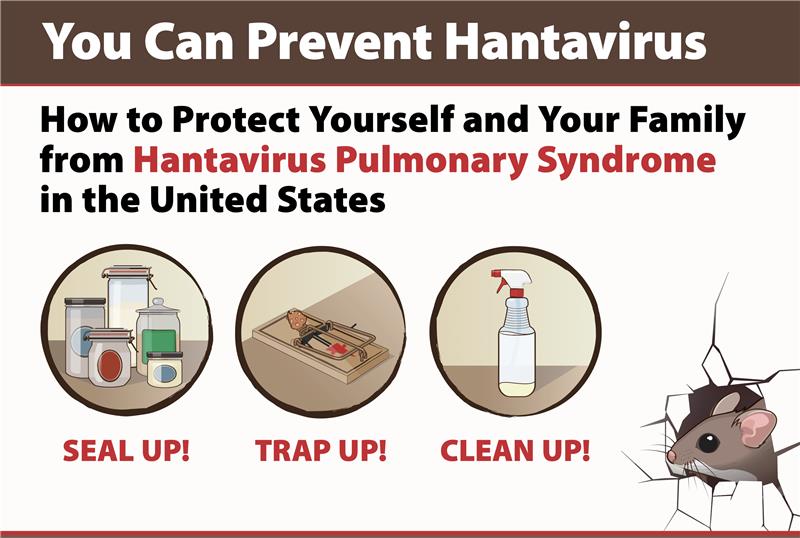
- Seal up holes or gaps where rodents may enter homes or buildings
-
- Do not sweep or vacuum rodent droppings, as this can stir virus particles into the air
-
- Instead, ventilate the area, wear gloves, spray droppings with a disinfectant or bleach solution, and carefully wipe up materials with paper towels
-
- Wash hands thoroughly after cleanup
The overall risk to the public in Utah remains low, but practicing safe rodent cleanup and prevention is the best way to protect yourself and your family.
Check out the this document from the CDC on how to prevent Hantavirus and specifics on how to clean up after rodents: https://www.cdc.gov/hantavirus/media/pdfs/2025/01/HantavirusBrochure-508.pdf
Updated 5/12/26 at 4:03pm