
Community Health Improvement Plan - CHIP - 2026-2030 Progress
Tracking the work toward a healthier Summit County
14 strategies across 3 priorities.
Overall CHIP Progress

Priority 1
Strengthen Partnerships to Impact Community Health Drivers
Collaborate with community stakeholders to address policy affecting community health drivers through inclusive communication and trust-building strategies.
Objectives:
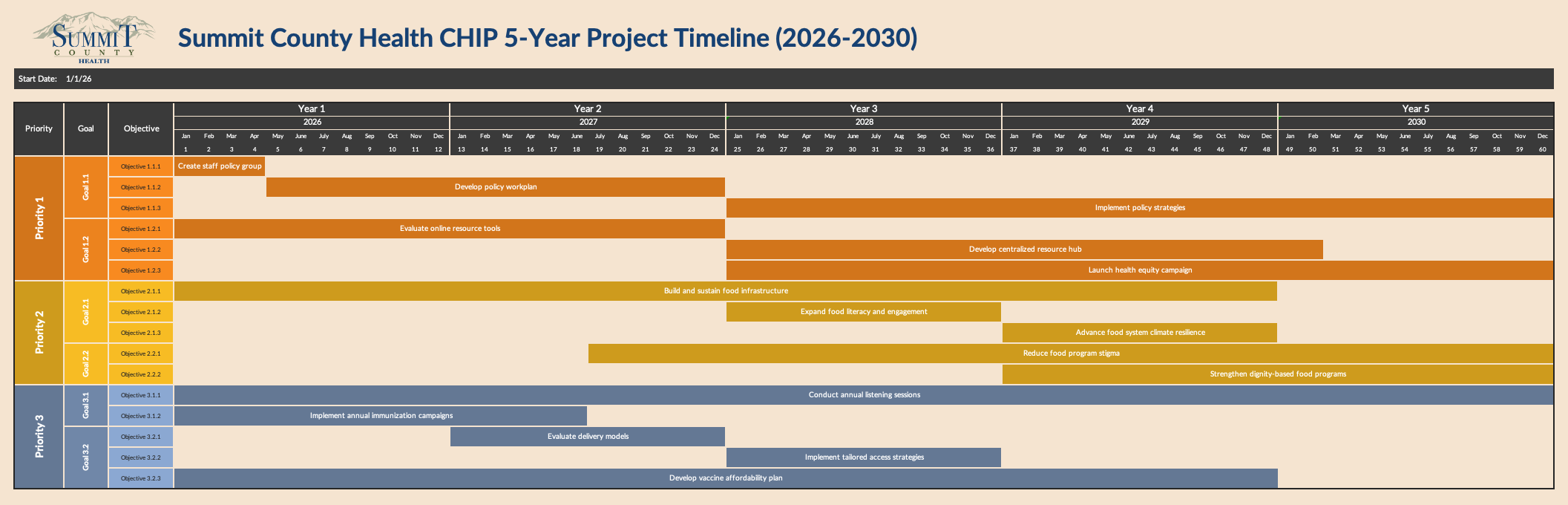
By April 2026, create a Health Department workgroup to address social conditions.
Action Steps:
- 1. Extend invitation to Health Department staff
- 2. Determine group structure and meeting cadence.
- 3. Identify work being done by other community groups, current policy efforts, and opportunities for public health partnerships during each meeting.
Between May 2026 and January 2028, the Health Department workgroup will identify policy needs and gaps in areas related to social conditions that influence health and develop a workplan to address the gaps that include plans for communication and evaluation.
Action Steps:
- 1. Conduct a scan of policy work being done in Summit County to identify gaps and opportunities for public health to support efforts.
- 2. Develop a workplan based on the policy scan to establish or strengthen partnerships to address identified gaps, considering community priorities and political feasibility.
From 2028 through 2030, the workgroup will implement policy strategies from the workplan
Action Steps:
- 1. Identify policy strategies from the workplan that can be accomplished within 1-2 years.
- 2. Implement policy strategies from the workplan utilizing the department communications strategic plan.
- 3. Evaluate each strategy for desired outcome at the end of implementation.
Leverage existing community partnerships and infrastructure to expand access to information, services, and coordinated health equity efforts.
Objectives:
By 2028, Health Department staff will identify and evaluate existing online resource tools.
Action Steps:
- 1. Conduct an inventory of existing online resource platforms to assess current functionality, accessibility, and alignment with community needs
- 2. Engage community members, service providers, and partner organizations to identify gaps, barriers, and opportunities to improve usability of these platforms.
From 2028 to March 2030, Health Department staff will build on existing platforms to create a comprehensive hub that connects community members to health, housing, food, childcare, transportation, and other local resources.
Action Steps:
- 1. Integrate access points for government support programs such as WIC, SNAP, Medicaid, and other assistance programs to streamline enrollment and referrals.
- 2. Ensure the platform is culturally responsive, multilingual, mobile-friendly, and accessible to individuals with access and functional needs.
- 3. Establish mechanism for long-term sustainability by fostering community-wide buy-in and active participation from nonprofits, local governments, and other organizations in maintaining and updating the hub.
From 2028 through 2030, Health Department staff will launch a community-centered health equity promotion campaign to help residents understand how investments in social conditions benefit the entire community.
Action Steps:
- 1. Create a health equity communications campaign in plain language with culturally and linguistically tailored materials that feature personal stories, CHA data, and relevant health issues.
- 2. Implement monthly health equity outreach events in public locations (e.g., libraries, clinics, community centers) to promote the resource hub and strengthen visibility and community connection with the Health Department.
- 3. Provide training for service providers, community leaders, and frontline staff to guide community members in using the platform effectively to ensure it remains a trusted, up-to-date community tool.
Priority 2
Improve Food and Nutrition Access for an Evolving Community
Collaborate with community stakeholders to address policy affecting community health drivers through inclusive communication and trust-building strategies.
Objectives:
By 2030, build and sustain community food infrastructure that increase equitable access.
Action Steps:
- 1. Partner with local governments, nonprofits, and producers to create shared-use facilities such as community kitchens and establish a food resiliency fund.
- 2. Support mobile markets to offer fresh, affordable food in underserved areas with convenient service times and community outreach.
In 2028, expand community food literacy and engagement across all Summit County regions.
Action Steps:
- 1. Support hands-on food education through gardens, classes, and school-based programs.
- 2. Collaborate with local chefs, athletes, and nutritionists to create multilingual cooking and nutrition videos distributed through community channels.
In 2029, advance climate resilience and sustainability within the local food system.
Action Steps:
- 1. Collaborate with local producers to assess climate-related risks and support adaptation strategies.
- 2. Educate consumers and institutions on sourcing climate-resilient, locally grown foods.
Leverage existing community partnerships and infrastructure to expand access to information, services, and coordinated health equity efforts.
Objectives:
From July 2027 through 2030, reduce stigma through inclusive communication and outreach.
Action Steps:
- 1. Launch a culturally responsive messaging campaign that normalizes participation in food support programs.
- 2. Partner with community hubs to host outreach events that celebrate food access and promote community connection.
From 2029 through 2030, strengthen local capacity for dignity-based food access programs.
Action Steps:
- 1. Engage community partners and volunteers to sustain participation and support for food programs.
- 2. Provide training for local leaders and service providers to champion programs and counter misconceptions.
Priority 3
Increase Immunization Coverage to Reduce Preventable Disease
Collaborate with community stakeholders to address policy affecting community health drivers through inclusive communication and trust-building strategies.
Objectives:
Conduct annual community listening sessions among various groups to assess vaccine hesitancy, affordability, and access gaps – using these findings to inform communication and outreach strategies.
Action Steps:
- 1. Engage a neutral external partner to plan and conduct listening sessions, focusing on priority groups (e.g., parents, young adults, community members) in accessible locations to ensure a broad demographic and geographic representation.
- 2. Analyze listening session data and existing sources to identify demographic and geographic patterns, key drivers of vaccine hesitancy, and information gaps.
By July 2027, partner with trusted community messengers to co-create and implement annual targeted immunization campaigns that address local barriers and improve vaccine confidence among priority groups.
Action Steps:
- 1. Identify and engage trusted community messengers (e.g. local leaders, healthcare providers, educators, spiritual leaders, and employers) representing diverse demographic and geographic areas.
- 2. Co-create culturally responsive, Summit County–specific evidence-based vaccine messaging in digital and print formats for groups identified in listening sessions.
- 3. Equip and support messengers to share co-created, evidence-based materials through clinical, community, and digital channels.
Leverage existing community partnerships and infrastructure to expand access to information, services, and coordinated health equity efforts.
Objectives:
In 2027, identify underserved populations and geographic access gaps through data analysis and evaluate existing vaccine delivery model to inform equitable access strategies.
Action Steps:
- 1. Conduct a countywide gap analysis to identify staffing needs, barriers, and potential sites for new models of delivery.
- 2. Evaluate new and existing platforms, partnerships, and reminder systems to support scheduling, follow-up, and education.
- 3. Develop an implementation plan to adapt and scale delivery models to meet identified needs.
In 2028, develop and implement tailored access strategies to improve vaccine reach and uptake among underserved and high-turnover populations identified through community assessment.
Action Steps:
- 1. Identify priority groups (e.g. visitors, J-1 visa workers, and young adults transitioning out of pediatric care) using data, community input, and employer contacts
- 2. Partner with employers, nonprofits, schools, health providers, and community organizations to deliver flexible vaccination opportunities and culturally appropriate messaging.
- 3. Collaborate with community partners involved in early childhood and family care (e.g., midwives, doulas, and others who regularly engage with new and expecting parents), schools and youthserving organizations, and adult-serving workplaces and community settings to host mobile clinics and expand convenient access.
By 2030, develop a countywide vaccine affordability and resilience plan to sustain equitable access for identified priority groups.
Action Steps:
- 1. Convene healthcare providers, pharmacies, insurers, and community organizations to assess affordability and adaptability to potential coverage and policy changes.
- 2. Develop a vaccine affordability and resiliency plan outlining funding mechanisms, policy options, stakeholders, and emergency response protocols.